2026-10-14 ·
What To Expect When Filing An Insurance Claim For Storm Water Damage Locally
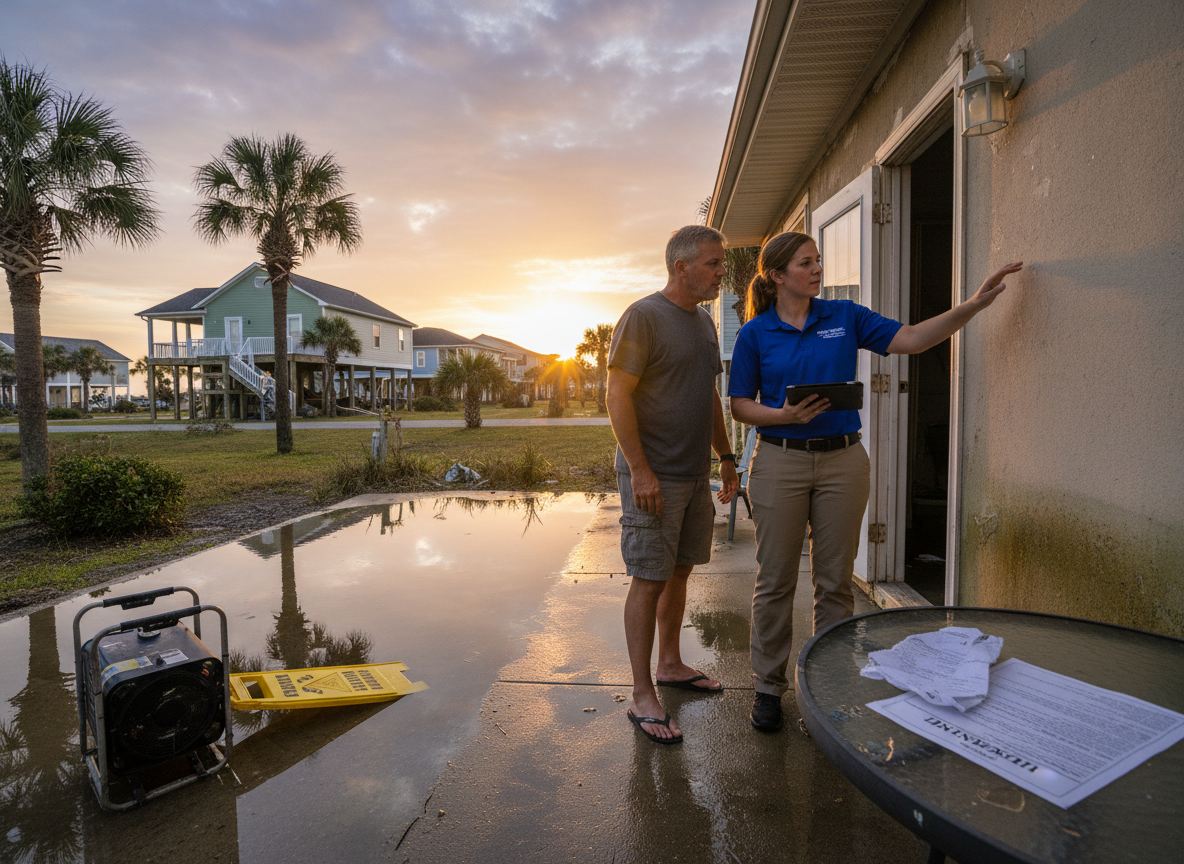
In Sunset Beach, filing an insurance claim for storm water damage typically moves from initial report to adjuster inspection within 3–10 days, followed by mitigation approval in another 1–2 weeks when documentation is complete. Homeowners along Pacific Coast Highway often see faster movement when they contact their carrier the same day water enters the structure. The mild coastal Mediterranean climate with cool summers means most claims here stem from winter storm surges rather than prolonged rain, which changes how adjusters evaluate coverage for Ocean Front properties.
Documenting Storm Damage Before Contacting Your Carrier
Start with dated photos and videos of every affected room, including walls, floors, and contents in homes near Sunset Beach. Note the exact time water entered, any high-tide correlation, and visible debris lines left by surge water. Orange County carriers frequently request proof that damage resulted from a covered storm event rather than gradual seepage common in older beach cottages. Keep a written log of every conversation with your insurer, including the representative’s name and reference number. This record proves essential when claims involve neighboring cities like Seal Beach or Huntington Beach where similar surge patterns occur.
How Local Terrain and Housing Stock Affect Adjuster Decisions
Many Sunset Beach residences sit on narrow lots with crawl spaces or slab foundations built before modern flood codes. Adjusters familiar with Orange County coastal properties often scrutinize whether water entered through doors facing the bay or through older window seals. Homes in the Greenbelt Section and near Peter’s Landing frequently show different damage patterns than inland structures because of tidal influence. Providing elevation certificates or past flood photos from the same address helps separate storm surge from everyday moisture issues tied to the cool-summer climate.
Working Through Mitigation and Scope Approval
Once the claim opens, insurers usually require emergency water removal before any permanent repairs. Local carriers expect mitigation to begin within 24–48 hours to limit secondary damage in humid coastal conditions. Scope disagreements often arise over whether drywall must be removed to the two-foot mark or whether subfloor drying alone suffices in slab homes. Flood restoration services teams working in Sunset Beach routinely document moisture readings at multiple depths so adjusters see the full extent of saturation caused by winter storms.
Common Delays Specific to Sunset Beach Claims
High-tide timing can push water back into structures days after the initial storm, creating disputes about when damage occurred. Carriers serving Orange County sometimes request additional engineering reports for properties on Humboldt Island or Trinidad Island where soil movement compounds water intrusion. Homeowners who schedule their own water damage mitigation before carrier approval risk out-of-pocket costs if the scope changes. Keeping receipts and photos of every drying step prevents these gaps.
Next Steps After Approval and Preventing Mold
After payment for mitigation, focus shifts to drying verification and any needed reconstruction. Local experience shows that crawl spaces in Bolsa Chica Area homes require extra attention because trapped moisture leads to hidden mold weeks later. Review the related guide on preventing mold growth in humid coastal homes after minor leaks for practical steps that align with most policies. For surge-specific drying sequences, the post on steps to dry out a flooded garage after high tide surges outlines equipment placement that matches conditions seen along Pacific Coast Highway.