2026-10-14 ·
Steps To Dry Out A Flooded Garage After High Tide Surges
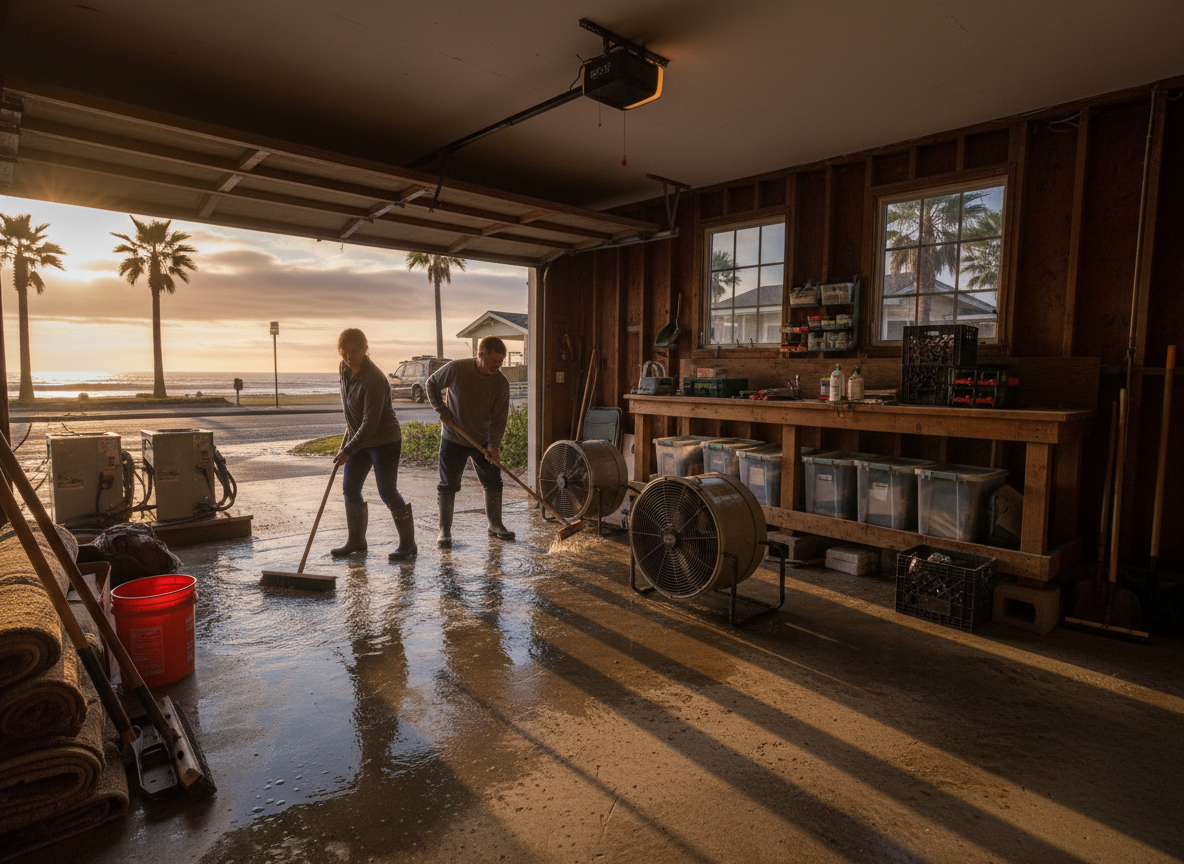
High tide surges in Sunset Beach can leave 2–12 inches of saltwater in a typical single-car garage. Complete drying usually requires 4–8 days when extraction begins within the first 24 hours and dehumidifiers run continuously at 40–50% relative humidity.
Safety First and Initial Assessment
Before any drying work, shut off power to the garage at the main panel and avoid contact with standing water if electrical outlets sit below the water line. Walk the perimeter on Sunset Beach streets such as those near Ocean Front to check for ongoing tidal inflow through door thresholds or vents. Note the water line on walls with a permanent marker and photograph it for insurance records. Saltwater accelerates corrosion on metal door tracks and vehicle undercarriages, so move cars outside immediately if the concrete slab shows visible pooling. In the cool-summer Mediterranean climate of Orange County, evaporation slows at night, extending the timeline by an extra day or two compared with inland areas like Huntington Beach.
Extract Standing Water and Remove Debris
Use a submersible pump rated for at least 1,500 gallons per hour to lower the water level below the slab grade within the first two hours. Follow with a wet-vac to pull residual water from expansion joints and low spots common in older Sunset Beach garages built on fill dirt. Sweep out seaweed, sand, and small debris that high tides carry in from the nearby Seal Beach channel; these materials trap moisture against the slab and promote odor. Emergency water removal crews often place air movers at floor level right after pumping to begin airflow across the wet concrete. Dispose of saturated cardboard boxes and drywall scraps in sealed bags to prevent spores from spreading into living spaces above the garage.
Drying the Slab, Walls, and Contents
Position commercial dehumidifiers rated for 70–100 pints per day in the center of the garage and direct air movers across the slab at a 45-degree angle. Concrete in coastal homes absorbs saltwater up to ¾ inch deep, so expect the drying phase to last 72–120 hours before moisture readings drop below 15% on a pin meter. Remove baseboards and drill ¼-inch weep holes every 16 inches along the bottom plate if water wicked into drywall; this allows trapped moisture to escape without cutting large sections. Open windows on the ocean side during daytime low tide when humidity outside stays under 65%, then close them at night to avoid reintroducing moist marine air. Vehicles stored inside should have floor mats and trunk liners removed and dried separately on sawhorses.
Preventing Mold in Humid Coastal Conditions
Saltwater residue left on surfaces lowers the threshold for mold growth to just 48 hours in Orange County’s mild climate. Wipe all metal and concrete with a 1:10 bleach solution after the slab reaches 12% moisture content, then rinse with fresh water to remove salt crystals that attract future moisture. Install a vapor barrier on the garage floor if the home sits in low-lying sections such as near Peter’s Landing where groundwater stays within 3 feet of grade. Preventing mold growth in humid coastal homes after minor leaks explains how to monitor relative humidity with a digital meter for the first two weeks. Run a small exhaust fan venting to the exterior for 30 minutes twice daily once the main drying equipment is removed.
Knowing When Professional Help Is Required
If moisture readings remain above 18% after five days or black staining appears along the slab-wall joint, contact a local water damage mitigation team based at 16812 Pacific Coast Hwy. Technicians carry moisture-mapping cameras and can place industrial desiccant dehumidifiers that handle the salt-laden air more effectively than rental units. Homes in the Greenbelt Section or along Admiralty Island often share drainage issues with neighboring properties, so a coordinated effort may be needed to prevent repeated flooding during the next king-tide cycle. The company operates 24/7 and can arrive with extraction equipment within two hours of a call from Sunset Beach residents.