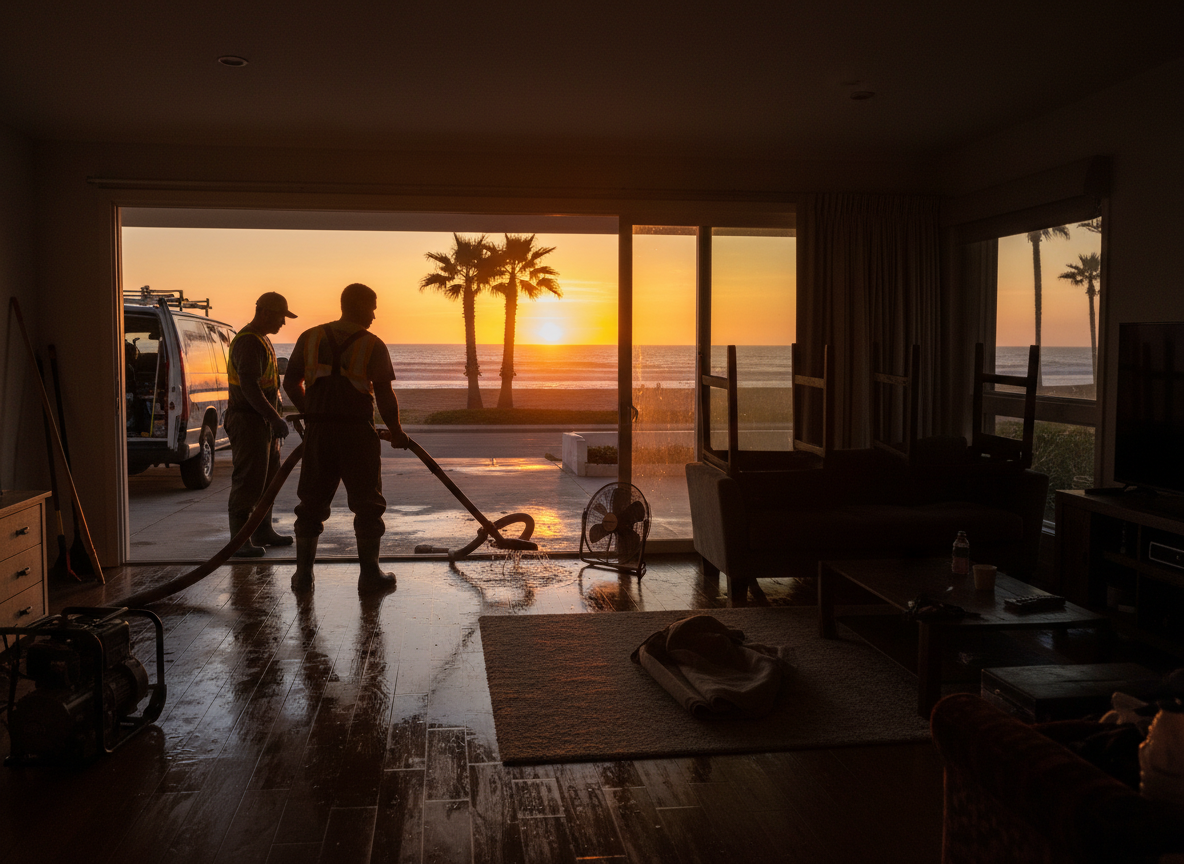
Cypress sits just inland from the sand in Sunset Beach, a pocket of older single-story cottages and mid-century bungalows built on narrow lots between Pacific Coast Highway and the marsh edges. When a pipe bursts or storm water backs up, the tight spacing and shallow foundations mean water spreads fast into neighboring yards and crawl spaces. Crews from 16812 Pacific Coast Hwy reach these blocks quickly via Warner Avenue or Main Street, bringing portable extractors sized for the small footprints common here.
Winter rains, though light in the mild coastal Mediterranean climate, still pool on the flat terrain because many Cypress streets lack modern curb drains. Salt air accelerates corrosion on older galvanized lines, so leaks often appear first under kitchen slabs or in bathroom walls. Restoration teams focus on pulling moisture from the dense stucco and plaster walls typical of these 1950s-1960s homes before mold sets in during the cool, humid nights.
Access in Cypress is limited by one-way alleys and beach parking restrictions, so equipment is staged at the curb on Pacific Coast Highway and carried in by hand. This changes drying plans—technicians use smaller air movers and focus on targeted dehumidification rather than whole-house setups used in newer Huntington Beach tracts.
Around Cypress
We regularly work near:
- 📍Warner Avenue
- 📍Pacific Coast Highway at Cypress Street
- 📍Edison Community Park
- 📍Los Alamitos Bay entrance channel
- 📍Seal Beach National Wildlife Refuge boundary
Water Damage Restoration Sunset Beach in Cypress — Local Notes
- •1950s-1960s bungalows on narrow lots mean water migrates quickly into shared walls and requires simultaneous drying on both sides.
- •Low elevation near the marsh edges causes poor drainage, so crews often install temporary sumps before extraction begins.
- •Narrow residential alleys off Pacific Coast Highway limit truck access, forcing hand-carrying of equipment and smaller drying zones.
- •Salt air corrodes older plumbing faster, leading to pinhole leaks that show up first in slab foundations during the wetter months.